
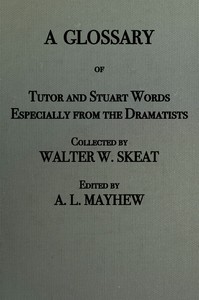
A glossary of Tudor and Stuart words, especially from the dramatists by Skeat
So, here’s the deal. This isn't a novel with a plot. Think of it as a massive, organized list—a glossary. Walter Skeat, a serious word-nerd from the 19th century, spent his time digging through the works of playwrights like Shakespeare, Marlowe, and Jonson, plus other writings from the Tudor and Stuart periods. He collected thousands of words that were common then but have since become strange or disappeared completely. The 'story' is the journey of the English language itself, seen through the slang, insults, and everyday terms that filled the air in the age of the Globe Theatre and the English Civil War.
Why You Should Read It
This book is a total game-changer for how you experience old plays and historical fiction. It turns a barrier into a bridge. Instead of just skipping over a puzzling term, you can look it up and get a direct hit of history and attitude. You learn that 'bootless' means 'useless,' and a 'malkin' was a scruffy cat—or a slovenly woman. It makes the past feel immediate and the people feel real. It’s less about memorizing definitions and more about unlocking a secret code to the thoughts and humor of people who lived 400 years ago.
Final Verdict
This is a must-have sidekick for anyone who loves Renaissance drama, historical novels set in this period, or is just fascinated by how language changes. It’s perfect for book clubs tackling Shakespeare, writers looking for authentic flavor, or curious readers who enjoy 'aha!' moments. It’s not a book you read cover-to-cover, but one you keep on the shelf and reach for whenever the past gets a little too cryptic. A brilliant, endlessly useful key to a lost world of words.
This text is dedicated to the public domain. Thank you for supporting open literature.
Emily Harris
1 year agoThe peer-reviewed feel of this content gives me great confidence.
David Rodriguez
1 month agoGreat value and very well written.
Robert Rodriguez
4 months agoIf you're tired of surface-level information, the author clearly has a deep mastery of the subject matter. The insights gained here are worth every minute of reading.
John Anderson
1 year agoI've gone through the entire material twice now, and the author’s unique perspective adds a fresh layer to the discussion. This has become my go-to guide for this specific topic.






Paul Miller
6 months agoI was particularly interested in the case studies mentioned here, the logic behind each conclusion is easy to follow and verify. I’ll definitely be revisiting some of these chapters again soon.